Home Page Image


Yes. Change Happens. Read on.

THE TIMES THEY ARE A CHANGING

Since early spring, NAMI Santa Clara County and other mental health groups have been fighting an impressive, valiant battle against stigmatizing elements of a "Psycho Donuts" store that opened outside San Francisco.

The store's worst features include a straitjacket, padded cell decorations and tasteless donut names-such as "Massive Head Trauma," which has especially enraged war veterans.

Concern has existed that the company's business plan may envision franchise expansion to other states or communities-but victory may be near. The store owner has promised an "evolution" and some changes are starting to be made. Nonetheless, the story "went national" this week.

  • Fox News ran a "debate" between the business owner-a Silicon Valley entrepreneur-and the head of United Advocates for Children and Families.
  • AOL ran a story with a reader survey-60 percent of respondents supported the store. Last time we checked, there were more than a thousand reader comments posted. Add your own!
  • An ABC News story also produced strong reader comments. Please review them and add your own.

Protests raise awareness and begin a process of education-and dialogue-even if they don't immediately change minds. Here are points to consider in posting your own comments on-line. The basic points can be used in almost any situation-and any ongoing reports of this controversy.

  • The U.S. Surgeon General has warned that stigma surrounding mental illness-including mockery-is a major barrier to people getting help when they need it.
  • Would a business ever seriously consider a humorous theme involving cancer, heart disease, diabetes or burn victims?
  • Mental health advocates work every day to help individuals and families who need help. Does Psycho Donuts support that need? For people who want to learn more about mental illness and education and support programs please visit the NAMI Web site.
  • We respect freedom of speech-which includes our right to protest. We also have a sense of humor (Food fight? Lemon donuts?). But there is such a thing as business social responsibility. Psycho Donuts should not be contributing to a public health crisis by reinforcing stigma. They should be supporting education and recovery.

Yes, donuts can be funny. But not tasteless ones that are hazardous to public health.

We congratulate NAMI Santa Clara County and all the other groups and individuals who have been leading the fight in the local community-and seeking a constructive outcome. We welcome the business owner's promise to "evolve." Let's hope it happens quickly.


RETURN TO TOP

PEOPLE WITH MENTAL ILLNESS LIVE 25 YEARS LESS THAN OTHER AMERICANS.

PEOPLE WITH MENTAL ILLNESS ARE MUCH MORE LIKELY TO BE HOMELESS (several hundred thousand of them) THAN OTHER AMERICANS.

HUNDREDS OF THOUSANDS OF PEOPLE WITH MENTAL ILLNESS ARE LOCKED UP IN OUR JAILS AND PRISONS RATHER THAT RECEIVING THE MEDICAL TREATMENT THAT THEY NEED AND DESERVE.

IN SHORT, PEOPLE WITH MENTAL ILLNESS ARE AMONG THE MOST DISPOSSESSED AND MISTREATED GROUPS IN OUR COUNTRY.

YET THERE IS A SHOP CALLING THEMSELVES PSYCHO DONUTS WHICH INSISTS ON POKING DERISION AT THOSE WHO HAVE A MENTAL ILLNESS. WITH THEIR PADDED CELL, STRAIT JACKET AND BATES MOTEL SIGN, THEY CREATE AND PERPETUATE STIGMA AGAINST PEOPLE WHO ARE UNLUCKY ENOUGH TO HAVE A SERIOUS MENTAL ILLNESS. AND STIGMA HURTS PEOPLE.

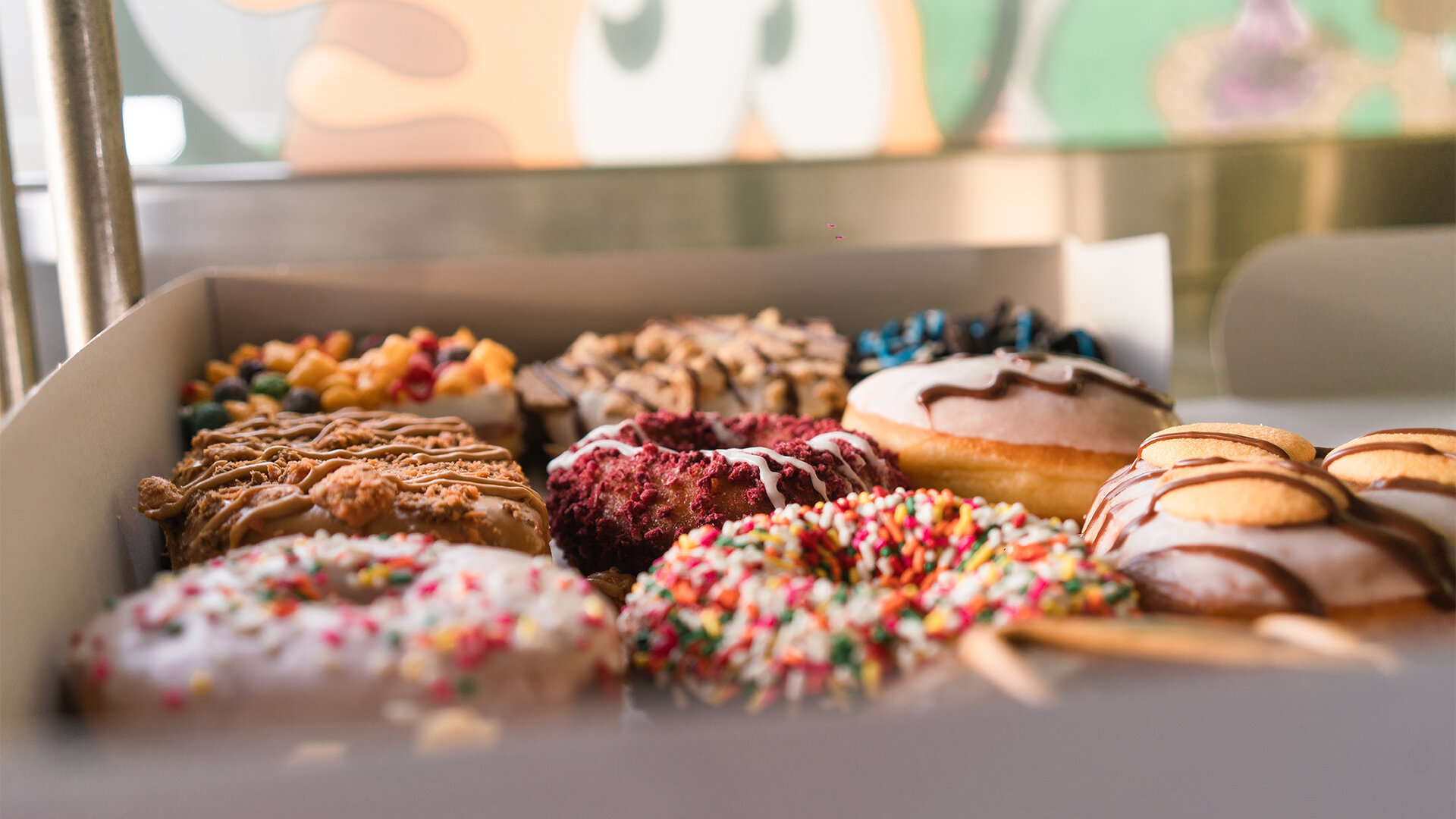
Their donuts with the names cereal killer, bipolar and massive head trauma, (the last one a face with red jelly dripping out of the side) create stigma and are extraordinarily offensive not only to those with a mental illness but those suffering from major head injuries including many veterans of current and past wars.

"STIGMA IS THE BIGGEST SINGLE REASON THAT THOSE WITH MENTAL ILLNESS DO NOT SEEK TREATMENT", WORLD HEALTH ORGANIZATION.

LACK OF TREATMENT CREATES UNNEEDED SUFFERING AND ADDED LONGTERM FINANCIAL COSTS. THUS BOTH THE U.S. HEALTH AUTHORITIES AND CALIFORNIA HEALTH AUTHORITIES ARE CONDUCTING MAJOR ANTI-STIGMA CAMPAIGNS.

HERE IS WHAT HIGHLY RESPECTED MENTAL HEALTH PROFESSIONALS SAY:

''There is a great deal of stigma associated with mental illness…further stigmatizing the illness leads to non-compliance with treatment , which leads to more negative outcomes." -- Professor Ira Glick, M.D., Stanford University School of Medicine.

"We don't need to ridicule the serious illnesses of a larger percentage of the general population by referencing straitjackets, padded cells and actual illnesses and or brain trauma in the most insensitive way imaginable." Dr. Steven Hinshaw, Chair of the Department of Psychology, U.C. Berkeley and author of "Mark of Shame: Stigma of Mental Illness and an Agenda for Change".

"Humor is usually a great thing, but (Psycho Donuts) is not funny at all to many people who have struggled with mental issues and to their family members." -- Professor Douglas Levinson, M.D., Stanford University School of Medicine.

"In Santa Clara County, more teens commit suicide than in other surrounding communities. Almost one-third of our local junior high students report some symptoms of depression—feeling so sad or hopeless that they withdraw from regular activities. We all know a tween or teen who struggles to fit in. People who are fighting mental illness don't need to be lampooned; they need our support." -- Jerry Doyle, CEO of EMQ FamiliesFirst, headquartered in Campbell.

RETURN TO TOP


Letter from NARSAD to the owners of PSYCHO DONUTS - April 9, 2009

Dear Jordan and Kipp,

We here at NARSAD have been hearing a lot about Psycho Donuts recently. We know that your store has gotten attention for its creative approach to donut-making. We know that the local chapter of the National Alliance for the Mentally III has protested your portrayal of mental illness as stereotyped and stigmatizing. And we know that you advertise the fact that you have contributed to NARSAD - the world - leading charity dedicated to mental health research - as proof that you understand and sympathize with people who are mentally ill.

Knowing all this, we need to return your contribution of $50 to NARSAD. We appreciate anyone who helps fund our efforts... but we can't allow NARSAD name to be used to justify your portrayal of mental illness.

Our language has many words that people use loosely to describe erratic behavior - psycho, crazy, nuts, and more. When these words are used to describe the normal vagaries of human life, they're harmless and funny enough. When they are used to describe people who have true mental illness, they hurt. From what we can see on your web site, your store has intentionally blurred the line between casual craziness and real mental illness in a way that can be more hurtful than you may realize.

In my own conversations with people who have donated to NARSAD, man of whom have loved ones with severe mental illness, I've been struck by two things. First; These diseases, which are biological brain disorder, are probably a greater cause of human suffering than any other illness. They can isolate people from their loved ones, cause a mental anguish that is almost physically painful, and lead to deep despair and all too often, suicide.

At NARSAD. we believe that the search for cures for these illnesses - which we have supported, with more and more success, for over 20 years - is one of the highest callings imaginable.

But Second - and equally important - I'm struck by how secretive so many people with mental illness have been about discussing their problem in public. Even today, when we know that diseases like schizophrenia and bipolar illness are matters of brain function and chemistry, many people feel a shame on top of their suffering. This shame is a major reason that so many people suffer more than they need to, and even shy away from seeking out treatment that could help them.

While you may not realize it, your store embodies the reasons that so many people with mental illness don't want to admit their problem. Our society has come to accept cancer as an illness like any other, and people with cancer can identify with prominent heroes and heroines Nom Lance Armstrong to Elizabeth Edwards. But mental illness, in contrast, still conjures up images like those in your store of Norman Bates and nameless sufferers in padded cells. We need to change these images and recognize the heroism of the people who struggle with these disorders, the people who love them, and the scientists searching for cures.

It's time to see mental illnesses for what they are: biological, treatable disorders that are as real and as serious as diabetes or heart disease. True mental illness is anything but funny. I hope you will take some time to visit our Web site, www.NARSAD.org, to learn more about what these disorder are realty about, and how we are working with scientists around the war ld to help treat them and ultimately cure them.

Sincerely,

Joel Gurin
Acting President
NARSAD

RETURN TO TOP


April 29, 2009

San Jose Mercury News
Barbara Marshman, Editor
750 Ridder Park Drive
San Jose, CA 95190

Regarding: OP-ED Piece Psycho Donuts

The California Mental Health Services Oversight and Accountability Commission (MHSOAC) has serious concerns about the new eatery in Campbell, California named Psycho Donuts and its marketing strategy. Although the owners might have meant to be cool and funny they are, in fact, promoting stigma and discrimination towards individuals with severe mental health problems and mental illness. In addition to its name and menu selection drawing upon mental health terms, sales staff dress as psychotic lab characters, or persons in white lab coats. Their decor not only includes a padded cell where children can take a photo opportunity while wearing a straight jacket but also a group therapy seating area. Their menu features items such as Manic Malt, Massive Head Trauma, Split Personality, or the Bipolar. The owners of Psycho Donuts perpetuate the continued ignorance towards mental health issues and amplify erroneous beliefs about mental health recovery.

Stigma is commonly defined as the use of stereotypes and labels when describing a person. Stereotypes are often attached to people with a mental illness. Stigma is what keeps many people from seeking the help they need. The negativity and misunderstanding that often surrounds mental illnesses fosters prejudice and discrimination, diminishing human dignity, creating fear and shame, and adding unnecessary pain to people who are already struggling.

Stigma goes far beyond the misuse of words and information, it is about disrespect. Unfortunately, our society tends to not give the same acceptance to mental illness as it does to other health concerns, such as heart disease. The stigma surrounding these misunderstandings can limit opportunities, stand in the way of a new job, increase feelings of loneliness, and cause many other unfortunate outcomes. In its efforts to reduce stigma and discrimination against individuals with mental illness, the MHSOAC wrote a policy paper entitled, Eliminating Stigma and Discrimination Against Persons With Mental Health Disabilities, June 2007. The document stresses that the media, such as radio and television stations, novels, newspapers and movies have portrayed and continue to portray individuals with mental illness as violent and pathetic victims, using the element of comedy. This portrayal has been adopted by some in our society, whose sentiments and reactions towards individuals with mental illness are guided by fear and mistrust.

In a similar vein, the National Council on Disability (NCD) poignantly stated in their March 2008 paper, Inclusive Livable Communities for People with Psychiatric Disabilities, that society’s deep-seated negative attitudes toward mental illness create real obstacles for people with psychiatric disabilities, as they attempt to be part of the many aspects of community living. In addition, this internalized stigma of having a psychiatric disability keeps individuals locked in a state of hopelessness because their immediate and extended support network, such as family members, physicians, teachers, or employers accept the notion of limited opportunities.

Using exaggerated themes of psychiatric diagnosis and treatment, Psycho Donuts reinforces stereotypical beliefs about mental illness held by society. The owners defend their beliefs by stating that society has become politically sensitive with little room for a sense of humor. They offer a simple solution that those people disagreeing with their marketing strategy should buy doughnuts elsewhere; or, they should spend their time on what the owners consider “bigger problems in the world.” However, for people living with mental illness and their families, the fight against the stigma associated with mental illness constitutes their “bigger problem” and we believe this is a societal problem for everyone to solve.

Sincerely,
Mental Health Services Oversight and Accountability Commission (MHSOAC)

Andrew Poat, Chair
Larry Poaster, Vice-Chair
Linford Gayle, Commissioner

RETURN TO TOP


The following is from www.stigmanet.org.

Psycho Donuts Spreads Stigmatizing Message To College Campuses.
2009 June 12

I am an Aspie, that’s a nickname for someone who has been diagnosed with Asperger’s Syndrome. It means I am on the autistic spectrum. I also have Major Depression, Anxiety, and ADD. I want to bring the following incident to your attention.

I am taking a film class at DeAnza College in Cupertino, CA. The DeAnza Academy of Independent Filmmakers club on campus held an event recently which I attended. Marc Buckland was the featured speaker. He gave a great presentation with insights on directing and producing for TV. Following his presentation, the owner of a new local shop called “Psycho Donuts” took the stage. Apparently the club invited him.

This man and his donut shop have stirred up huge controversy in Santa Clara County. This owner decided he wanted to make a fun-themed restaurant "where parents can take their children and not pay a lot.”

The theme is a mental institution. You can eat your donuts in the Group Therapy Room and have your children photographed in a real straightjacket in the shop’s padded cell. The donuts have strange toppings, such as cereal and candy. Order your favorite – Bi-Polar, Massive Head Trauma, or any of the DSM IV psychiatric diagnoses.

Seriously, the owner thinks it is funny to name the donuts after mental illnesses. So why was this man on DeAnza College’s campus? (DeAnza is a local community college.) He came to encourage students to send him short films with donuts in them that he will play on monitors at Psycho Donuts. He apparently has a channel on YouTube, as well. Also, he offered to help the students with fundraising by providing them Psycho Donuts at wholesale prices to sell on campus. He will even send over some “crazy doctors and nurses to help.” (His employees wear doctor and nurses uniforms and lab coats.)

Nice way of marketing, isn’t it? Get the students to sell your donuts and you don’t have to pay a dime. Never mind the effect it will have on students who have diagnoses. When I protested that it wasn’t funny, I was told by an officer of the club to “stop disrupting the meeting.” She also told me, “you’re taking this too seriously.” And when I persisted, she told me to “take it outside.”

I wrote the college’s newspaper and my letter was published in it. My letter is starting to make the circuit to various organizations (by way of people forwarding it) such as NAMI (National Alliance on Mental Illness) and Silicon Valley Independent Living Center. I also wrote the San Jose Mercury News and my letter was published May 9.

The local NAMI president e-mailed me the press-release that NAMI sent out on 4/28/09 about the impact this shop is having on the mental health community. He said I could e-mail it to anyone at the college. I e-mailed it to the film club members. The officer who told me to “take it outside” responded by asking if I also would have protested Jack Nicholson for his portrayal in a mental hospital. She wrote that she has visited mental hospital 3 times and was in special education. Her mother has bi-polar. She sees nothing wrong with the donut shop owner’s “creativity” and says “this is a free country.”

Clearly there is a difference between “One Flew Over the Cuckoo’s Nest” which dramatized the deplorable treatment of patients in mental hospitals of that era and the ridiculing of those with mental illnesses in the guise of “humorously” naming strange looking donuts after psychiatric illnesses and encouraging students to sell them on campus regardless of how students with diagnoses might feel.

There is a federal law, ADA, that protects those with disabilities from discrimination at school. DeAnza College is funded by the State of California. I do not expect to be publicly humiliated and to have my disability ridiculed at a school sponsored event. While this is a free country, not everything that is creative is allowed at school.

I am certain that if the owner covered a donut with black licorice and named it “Nigger”, he would never have been allowed on campus.

I do not feel I should be subjected to this at school.

Kim Hing
Film Student


facts